Is AES-256 Quantum Resistant?

Last published September 10, 2020
With quantum computers getting more powerful each year, many worry about the safety of modern encryption standards. As quantum computers improve in performance and the number of qubits used for calculations increases, current cryptosystems are under threat. AES-256 is one of the most powerful symmetric ciphers, but will it remain secure in a post-quantum world?
What will break post-quantum?
Many asymmetric encryption algorithms have been mathematically proven to be broken by quantum computers using Shor’s algorithm. Shor’s algorithm solves the following problem:
Given an integer N, find its prime factors.
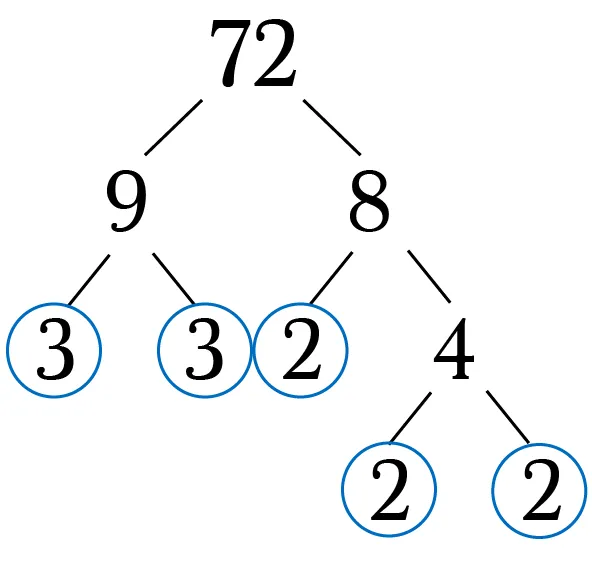
Because algorithms like RSA rely heavily on the fact that normal computers can’t find prime factors quickly, they have remained secure for years. With quantum computers breaking that assumption, then it may be time to find new standards.
The following are examples of encryption that Shor’s algorithm can break:
Symmetric Encryption
Symmetric encryption, or more specifically AES-256, is believed to be quantum-resistant. That means that quantum computers are not expected to be able to reduce the attack time enough to be effective if the key sizes are large enough.


Grover’s algorithm can reduce the brute force attack time to its square root. So for AES-128 the attack time becomes reduced to 2^64 (not very secure), while AES-256 becomes reduced to 2^128 which is still considered very secure.
A Caveat
It is important to remember that 256-bit keys derived from passwords actually can have less than 256-bits of entropy. If the owner of the key generated it from a weak password an attacker can try deriving keys from common passwords instead of trying random 256-bit numbers.
For example, instead of randomly trying
- azpV4CYbAwQUP4BaJJJNDBxEUkghMF8x2Sd4Q7ihD04=
- mtOXPNln432smP3pd3rVLw9rpGGkVsiqRhUFLXy/KBw=
- ..
An attacker could try the following:
- password123 –> 75K3eLr+dx6JJFuJ7LwIpEpOFmwGZZkRiB84PURz6U8=
- password1234 –> uclQZA4bN0DpisuT5mnGV2b2Zw3RYJupH/QQUrpIxvM=
- …
If you are implementing AES in a cryptosystem in 2020 you should favor AES-256 over AES-128 for the quantum resistance and extra security that it offers.
Related Articles
Bcrypt Step by Step
Aug 24, 2020 by Lane Wagner - Boot.dev co-founder and backend engineer
Bcrypt is a key derivation function, which can be thought of as a special kind of hash function. Its purpose is to slowly convert a piece of input data to a fixed-size, deterministic, and unpredictable output. A common use case is to convert a password into an n-bit cryptographic key, which can then be used for safe authentication.
Shamir's Secret Sharing Step-By-Step
Aug 18, 2020 by Lane Wagner - Boot.dev co-founder and backend engineer
Adi Shamir’s Secret Sharing is a cryptographic algorithm that allows distinct parties to jointly share ownership of a single secret by holding shares. The original secret can only be reconstructed by using a minimum number of shares, which allows different parties to cooperate without the need to fully trust one another.
They Who Control Encryption
Aug 12, 2020 by Lane Wagner - Boot.dev co-founder and backend engineer
If you’ve seen The Imitation Game or studied computer science in school, you have likely heard of Enigma, Alan Turing, or some of the other advances in cryptography that took place during the Second World War. During this time and until the 1970s, governments from around the world had near-total control of all cryptographic systems. It was nearly impossible to learn about encryption without going through a government agency.
(Very) Basic Intro to PGP (GPG)
Jul 27, 2020 by Lane Wagner - Boot.dev co-founder and backend engineer
PGP, or its open-source alternative, GPG, is a program used to encrypt data such that only an authorized party can decrypt it. In this introduction, we will cover its use-cases and a high-level overview of the algorithms involved.